

Other Programs
Advanced PLC and HMI Programming
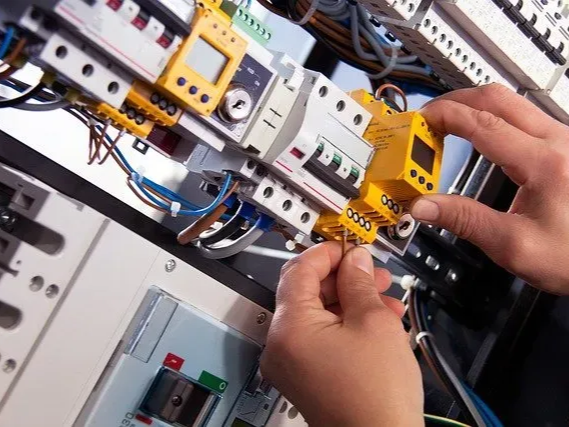
Click image for more photos
OVERVIEW
This three-day intensive training program is designed to equip participants with the knowledge and practical skills necessary to design, program, and integrate Programmable Logic Controllers (PLC) with Human-Machine Interface (HMI) systems in industrial automation. Using Delta’s DVP-14SS2 PLC and DOP Series HMI with DOPSoft 4.0 and ISPSoft, participants will progress from foundational programming to advanced system integration.
The course covers sequential control of electro-pneumatic cylinders, design and configuration of operator interfaces, arithmetic and data register operations, Modbus communication protocols, and Variable Frequency Drive (VFD) control via PLC and HMI.Hands-on exercises will reinforce programming logic, hardware interfacing, and troubleshooting techniques essential for real-world automation systems.
By the end of this program, participants will be able to design, simulate, and deploy an integrated PLC-HMI system capable of controlling and monitoring automated machines or processes.
WHO SHOULD ATTEND
- Maintenance engineers
- Automation specialists
- Industry practitioners and
- Control technicians with prior basic PLC & HMI knowledge
LEARNING OBJECTIVES
By the end of this training, the participants will be able to:
Developed Advanced PLC Programs.
- Create and implement ladder logic for sequential and interlocking control of electro-pneumatic cylinders and automated processes.
Design Interactive HMI Interfaces.
- Build User Friendly Delta HMI Screens using DOPsoft with Buttons, indicators, numeric display, alarms, and History Logs.
Integrate PLC, HMI and VFD Systems
- Configure and Link Delta DVP PLC, DOP HMI and LS Variable Frequency Drive using Analog to Digital and Digital to Analog Converter.
Apply Arithmetic and Data Register Instructions
- Utilize data registers, arithmetic, and comparison operations to perform complex automation control and monitoring functions.
Simulate, Test, and Troubleshoot Systems
- Perform offline and Online simulations, verify control logic, and troubleshoot communication or programming issues effectively.
TOPICS TO BE DISCUSSED
DAY 1
Basic to Advanced HMI Programming
- Course Introduction
- How to Create HMI Program and How to simulate PLC and HMI Program using DOPsoft and ISPsoft
- Basic HMI Commands
- Intermediate HMI Commands
- Continuation of Intermediate HMI Commands
- Advanced HMI Commands
DAY 2
HANDS-ON ACTIVITIES
- Macro Programming
- Macro Programming Activity
- Arithmetic Instructions & Data Registers: Basic Calculator Operations in PLC and HMI
- Arithmetic Instructions & Data Registers: Series Circuit Operation in PLC and HMI simulation
- Arithmetic Instructions & Data Registers: Parallel and Series-Parallel Circuit Operation in PLC and HMI simulation
- VFD different control protocol and PLC Programming with VFD Applications
DAY 3
HANDS-ON ACTIVITIES
- PLC Programming using Analog to Digital Module
- PLC Programming Using Digital to Analog Programming
- PLC-HMI and VFD Interfacing
- PLC-HMI and VFD Interfacing Activity – RPM Measurement
- PLC Programming using Rotary Encoder and High-speed Counter Operations
- Proximity Sensors Interfacing to PLC and Electro-Pneumatic Sequential Control
- Electro-Pneumatic Sequential Automatic and Manual Control
- PLC Programming with VFD Applications and Electro-Pneumatic Sequential Control
RESOURCE PERSON

Engr. Rafael A. Dimaculangan, ECE
Training Manager and Program Development Head
PAMAV Training Institute and Technology Center, Inc.
He is currently the Training Manager and Head of Program Development at PAMAV Training Institute and Technology Center Inc. He previously worked as a University Researcher at Jose Rizal University and as an Energy Research and Program Development Engineer and Program Manager at Meralco Power Academy.
He is an Electronics Engineer specializing in Mechatronics Systems and Instrumentation & Process Control, with professional experience as a Senior Automation Engineer (PLC Programmer), Technical Manager, and Project Manager in various technology and engineering firms.
He earned his Master of Engineering in Electrical Engineering from the Technological University of the Philippines and is currently pursuing a Doctor of Engineering Management at Pamantasan ng Lungsod ng Maynila. He has also served as a Professor at National University–Manila and Far Eastern University College of Engineering.
He is a Certified Energy Manager and Certified Energy Auditor, with experience in energy systems, automation, research, project management, and technical training.
REQUIREMENTS
This training is intended for:
- Engineers, technicians, electricians, automation personnel, and individuals with background knowledge in PLC systems and industrial automation.
- Participants are expected to have basic PLC programming knowledge or equivalent industry experience.
- Familiarity with ladder diagram programming, control circuits, and HMI operation is recommended.
- Participants are advised to bring a personal laptop for programming exercises and software activities.
TRAINING INCLUSIONS
- Certificate of Attendance
- E-Handouts
- Earns CPD Points for ELECTRONICS
This program is accredited by:
Top Courses
Electrical System Protection Coordination
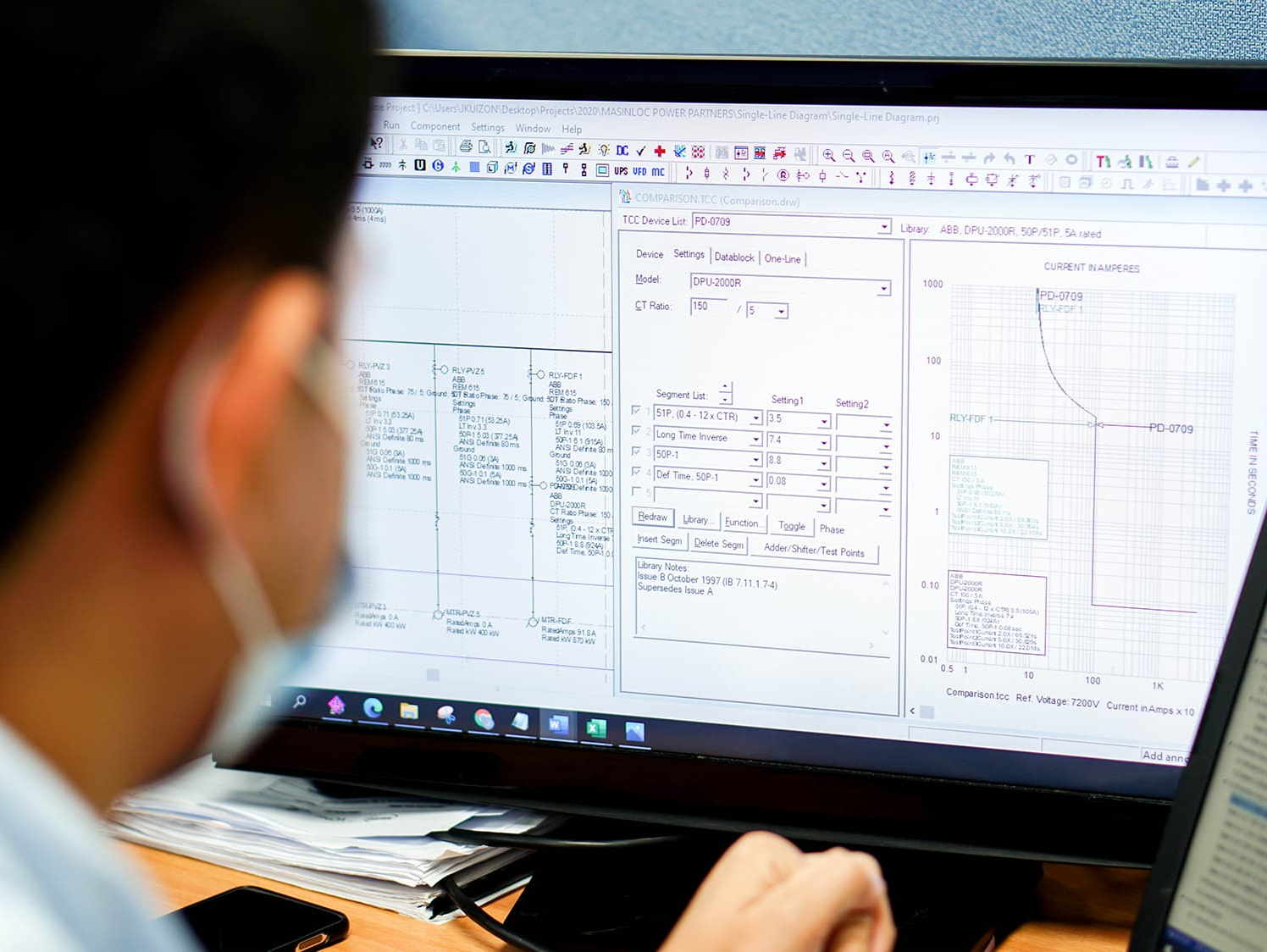
Power System Analysis are an essential part of electrical power system design. Load flow analysis, short circuit analysis, and protection coordination are necessary to verify that the electrical system including the system components, are correctly specified to perform as intended, withstand expected stress, and be protected against failures.
Electrical Safety in the Workplace for Mission Critical Facilities
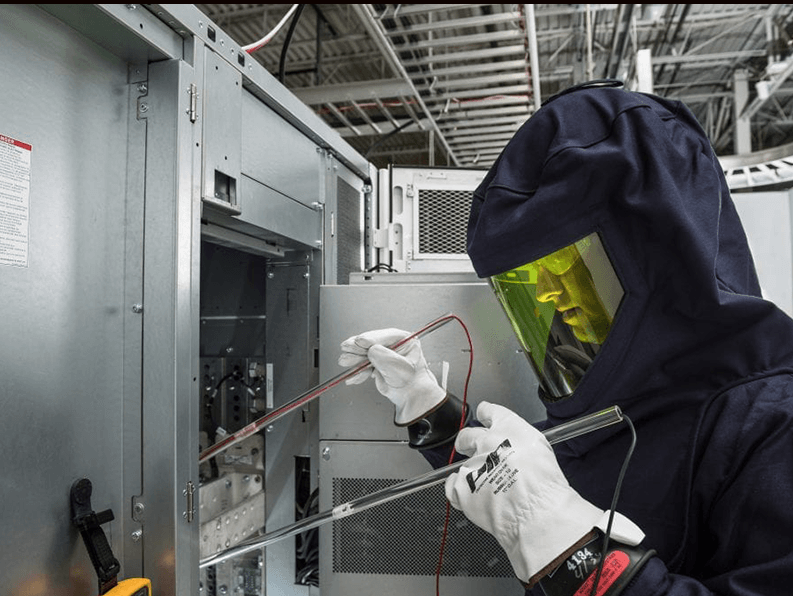
This program will discuss the Electrical Safety-related work practices necessary to prevent workplace accidents. The program involves topics on preservation and protection of both the workers and the physical assets in the workplace hence, promoting a safe and healthy environment.
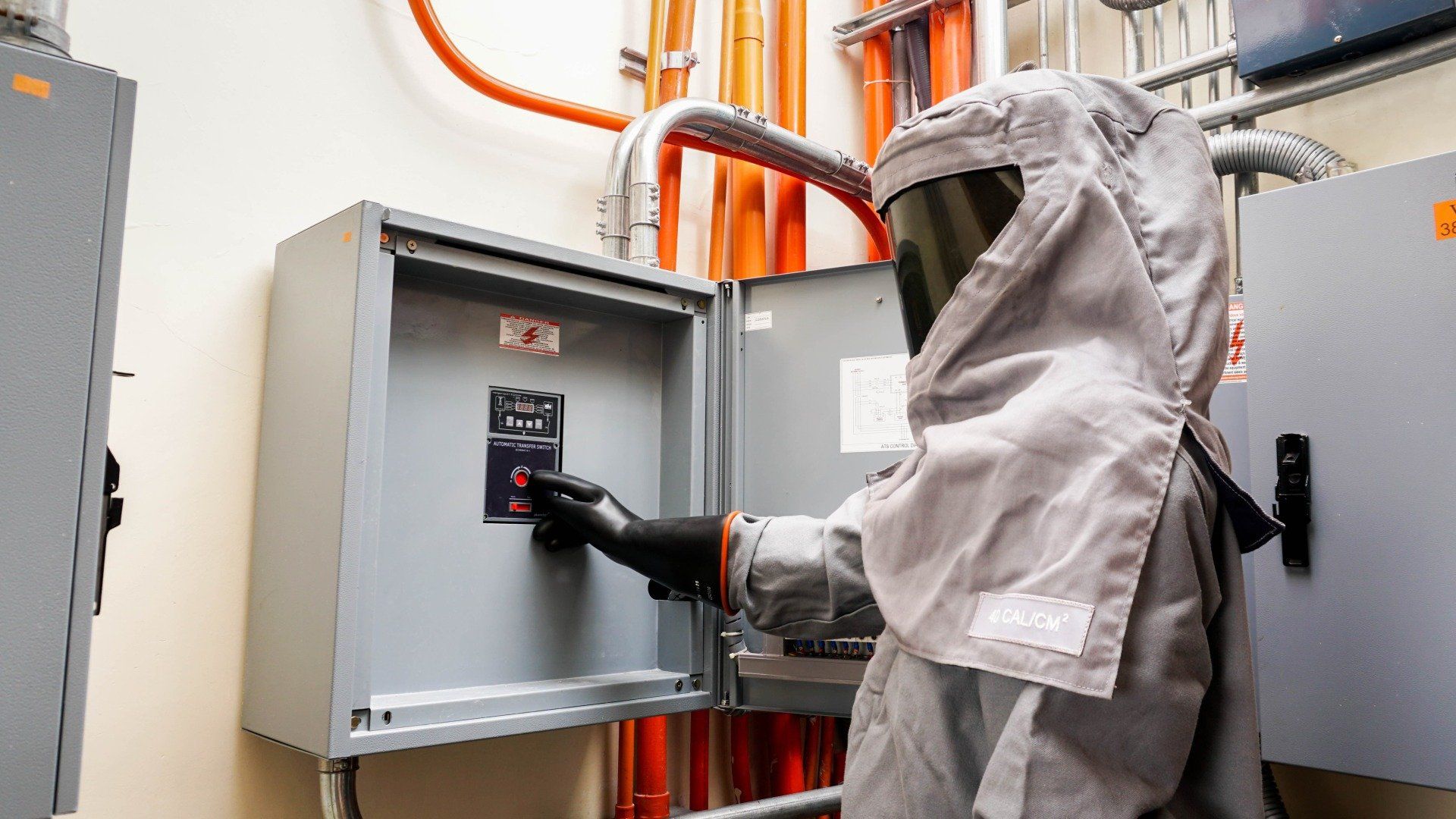
Arc Flash Risk Assessment
Proper implementation of Arc Flash Risk Assessment can significantly reduce injuries from Arc Flash and Arc blast events.