
DOE Certification Programs
Certification for Energy Auditor

Click image for more photos
OVERVIEW
This course is designed to enhance the knowledge, practical skills, and attitude applicable to performing work activities involved in implementing planning and supporting the implementation of regular energy audits, facilitating compliance with all relevant policies, and operating and maintaining energy-consuming machines and equipment in facilities.
WHO SHOULD ATTEND
- Energy Managers
- Facility Managers
- Auditors
- Engineers
- Sustainability Professionals
- Anyone Passionate About Energy Efficiency
LEARNING OBJECTIVES
At the end of the program, the learners should be able to:
- Recognize the main processes in the auditing process and the goals of energy audits.
- Know the various audit levels and how to prepare for a successful audit.
- Effectively inform clients of the findings of energy audits.
- Recognize rate structures, benchmarking, and conversions between energy forms and energy units.
- Understand how to create energy balances and analyze energy use in a facility.
- How to define the information that must be gathered before and during field trips, how to analyze the data that was gathered, and how to turn the data into information.
- Be able to apply procedures and tools to evaluate and decide on investment projects regardless of their type; the primary emphasis is on energy efficiency projects.
- Recognize the ideas behind and features of energy-consuming systems.
- Contribute to the professional standards of those engaged in energy auditing.
TOPICS TO BE DISCUSSED
DAY 1
- Module 1: Importance of Energy Management
- Module 2: Energy Audit & Energy Power Use Analysis
- Module 3: Standards and Codes Used in Energy Management
- Module 4: Energy Audit Processes
DAY 2
- Module 5: Instruments & Devices Used in Energy Audit
- Module 6: Green Buildings Design Standards
- Module 7: Energy Audit: Accounting, Life Cycle Cost, Capital Investments
- Module 8: Electrical Power Systems Used in Energy Audit
DAY 3
- (continuation) Module 8: Electrical Power Systems Used in Energy Audit
- Module 9: Energy Audit for Drives & Motors
- Module 10: Energy Audit on Lighting Systems
- Module 11: Importance Of Maintenance And Commissioning In Energy Audit
DAY 4
- Module 12: Energy Audit For HVAC Systems
- Module 13: Application And Effects Of Building Envelopes In Energy Audit
- Module 14: Building Automation And Control Systems In Energy Audit As A Tool
- Module 15: Thermal Energy Storage Systems
DAY 5
- Module 16: Importance Of Energy Audit In Boilers And Steam Systems
- Module 17: Application Of Combined Heat & Power And Use Of Renewable Energy Audit
- Module 18: Importance Of Energy Audit In Industrial Systems
- Module 19: The Importance Of M&V In Energy Audit in Saving & Conservation
DAY 6
- Module 20: Energy Audit In Transport Systems: Air, Sea & Land
- Module 21: ANSI, ASHRAE, ACCA Standard 211-2018
- Module 22: How To Develop An Energy Audit Plan & Strategies, ISO 50002 & IS0 50001 Standard
- Module 23: DOE Documents Compliance
- Module 24: Responsibilities And Functions Of An Energy Auditor With The Energy Manager
DAY 7
- Review program
- Pre- Examination Evaluation
- Examination Proper (Virtual and Physical)
RESOURCE PERSON 1

Engr. Rodolfo Peñalosa, PEE, PECE, APEC, ACPE, IIEEF, CEM, CEA
President and Training Director
WESTCO Electrical and Equipment Corp.
PAMAV Training Institute and Technology Center, Inc.
Engr. Peñalosa has extensive experience for almost five decades as a Professional Electrical Engineer and other engineering disciplines under his title. . He is a technical speaker and official delegate in various conferences and seminars such as Power System Maintenance in Doble Engineering Conference in Boston, Electrical Design Simulation Analysis on Short Circuit at San Diego California and Power Quality - High Voltage Power Factor Correction with Harmonics at Finland to name a few.
Engr. Peñalosa's significant contribution in the electrical industry is when he was Chairman of the Board of Electrical Engineering from the Professional Regulation Commission (PRC) for nearly 11 years. He was former Chairman for the Technical Panel for Engineering & Technology (TPET) with the Commission on Higher Education (CHED) and former President at Institute of Integrated Electrical Engineers of the Philippines (IIEE) and Society for Philippine Electrical Contractors and Suppliers Inc. (SPECS), Philippine Institute of Construction Arbitrators and Mediators (PICAM) and former President of the (COFILCO) Confederation of Filipino Consulting Organization.
Engr. Peñalosa also conducted studies under the Development Bank of the Philippines - Physical Infrastructure and Technology - Communication Studies-, developed an electrical construction methodologies with JICA and conducted studies on Urban lnstructure Development on Information Technology with BLISTT Project: Baguio, La Trinidad, ltogon, Sablan, Tuba, Tublay Groth Areas.
He is currently the President of WESTCO Electrical Equipment Corp., Engineering Director of VCP Trading International Corp. and (PamavTech), PAMAVTraining Institute & Technology Center, Inc., and its Training Director.
RESOURCE PERSON 2

Engr. Rafael A. Dimaculangan, ECE
Training Manager and Program Development Head
PAMAV Training Institute and Technology Center, Inc.
He is currently the Training Manager and Head of Program Development at PAMAV Training Institute and Technology Center Inc. He previously worked as a University Researcher at Jose Rizal University and as an Energy Research and Program Development Engineer and Program Manager at Meralco Power Academy.
He is an Electronics Engineer specializing in Mechatronics Systems and Instrumentation & Process Control, with professional experience as a Senior Automation Engineer (PLC Programmer), Technical Manager, and Project Manager in various technology and engineering firms.
He earned his Master of Engineering in Electrical Engineering from the Technological University of the Philippines and is currently pursuing a Doctor of Engineering Management at Pamantasan ng Lungsod ng Maynila. He has also served as a Professor at National University–Manila and Far Eastern University College of Engineering.
He is a Certified Energy Manager and Certified Energy Auditor, with experience in energy systems, automation, research, project management, and technical training.
RESOURCE PERSON 3

Engr. Ermie Glenn D. Magura, RMEE
Department of Science and Technology – MIMAROPA, Training Coordinator
Engr. Magura graduated from Palawan State University's Main Campus with a Bachelor of Science in Mechanical Engineering.
He has been a Licensed Mechanical Engineer since 2022, with a 90.75% passing rate.
A Registered Master Plumber.
He was the previous training coordinator for MIMAROPA's Department of Science and Technology and Currently employed as a mechanic and CEM for Philippine Airlines.
REQUIREMENTS
- Able to communicate in basic English both oral and written.
- Physically and mentally fit.
- Must have at least one (1) year of continuous experience in conducting energy audits in buildings and industrial facilities And/or other similar establishments.
- For new graduates of College, K-12 Academic Track of Science, Technology, Engineering and Mathematics (STEM), or equivalent,Transcript of Records and/or Diploma; and
- Certification of experience duration and field is proposed to be given by the respective organizations where the trainees belong.
- For independent professionals, certification may be issued from clients or organizations where the required activities were conducted.
TRAINING INCLUSIONS
- Certificate of Attendance
- E-Handouts
- Earn CPD Points for ELECTRICAL ENGINEERING
This program is accredited by:
Top Courses
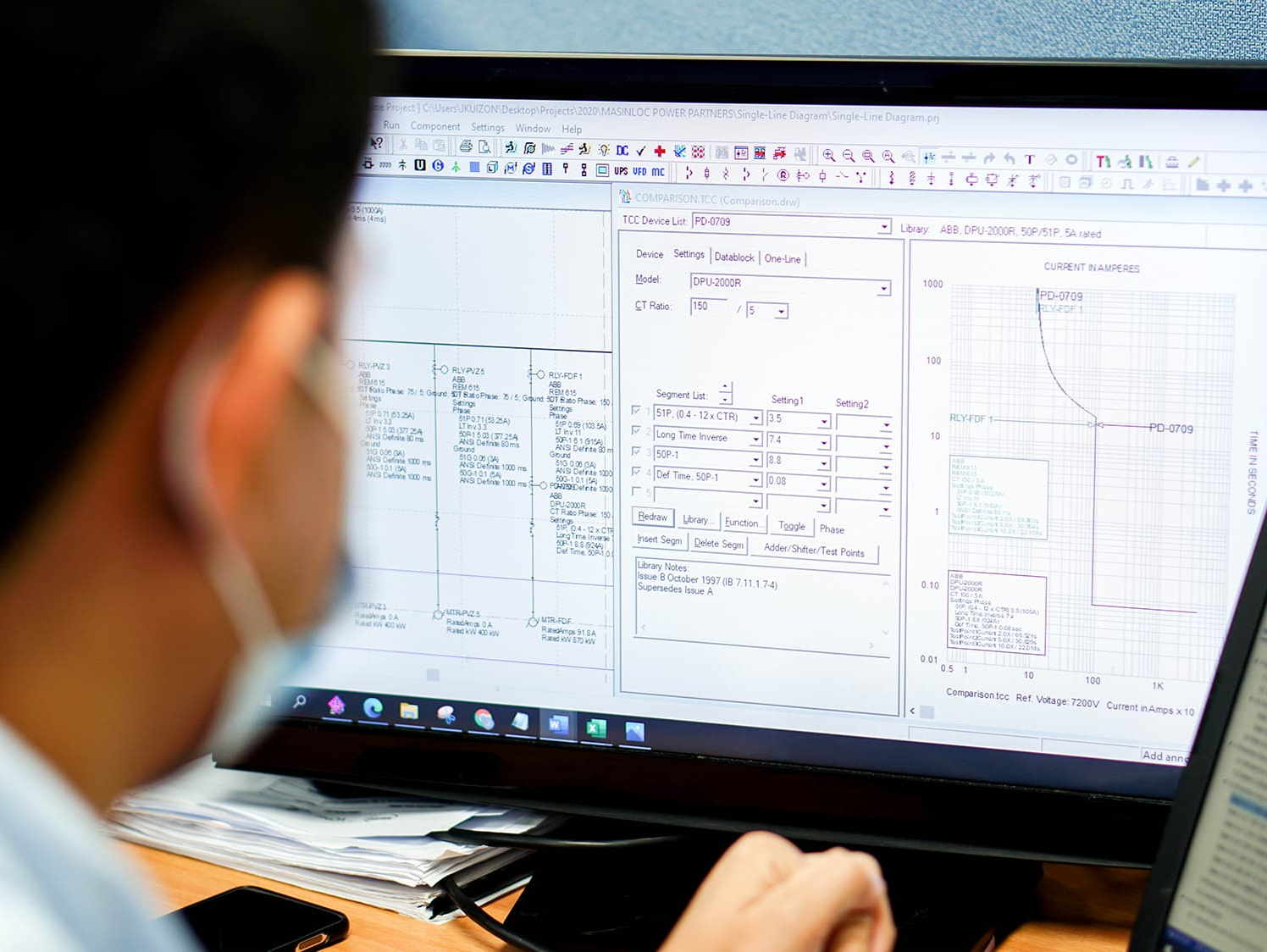
Electrical System Protection Coordination
Power System Analysis are an essential part of electrical power system design. Load flow analysis, short circuit analysis, and protection coordination are necessary to verify that the electrical system including the system components, are correctly specified to perform as intended, withstand expected stress, and be protected against failures.
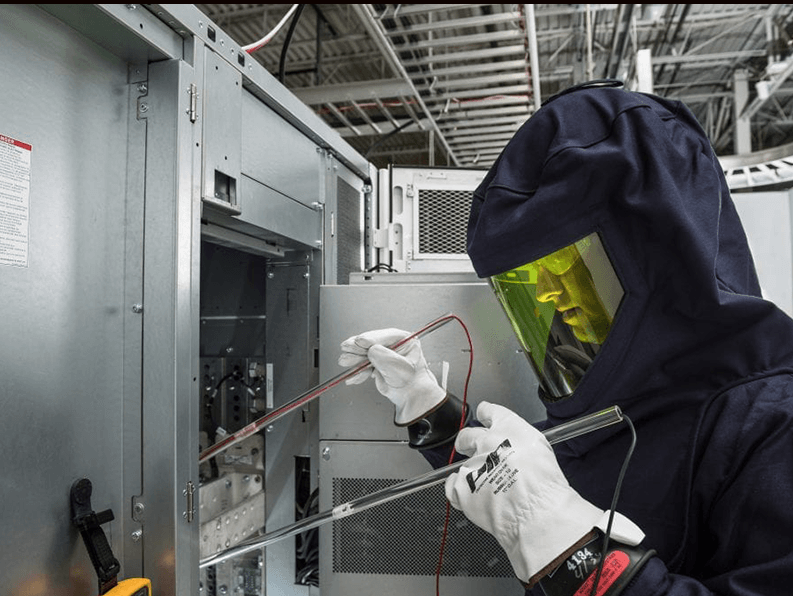
Electrical Safety in the Workplace for Mission Critical Facilities
This program will discuss the Electrical Safety-related work practices necessary to prevent workplace accidents. The program involves topics on preservation and protection of both the workers and the physical assets in the workplace hence, promoting a safe and healthy environment.
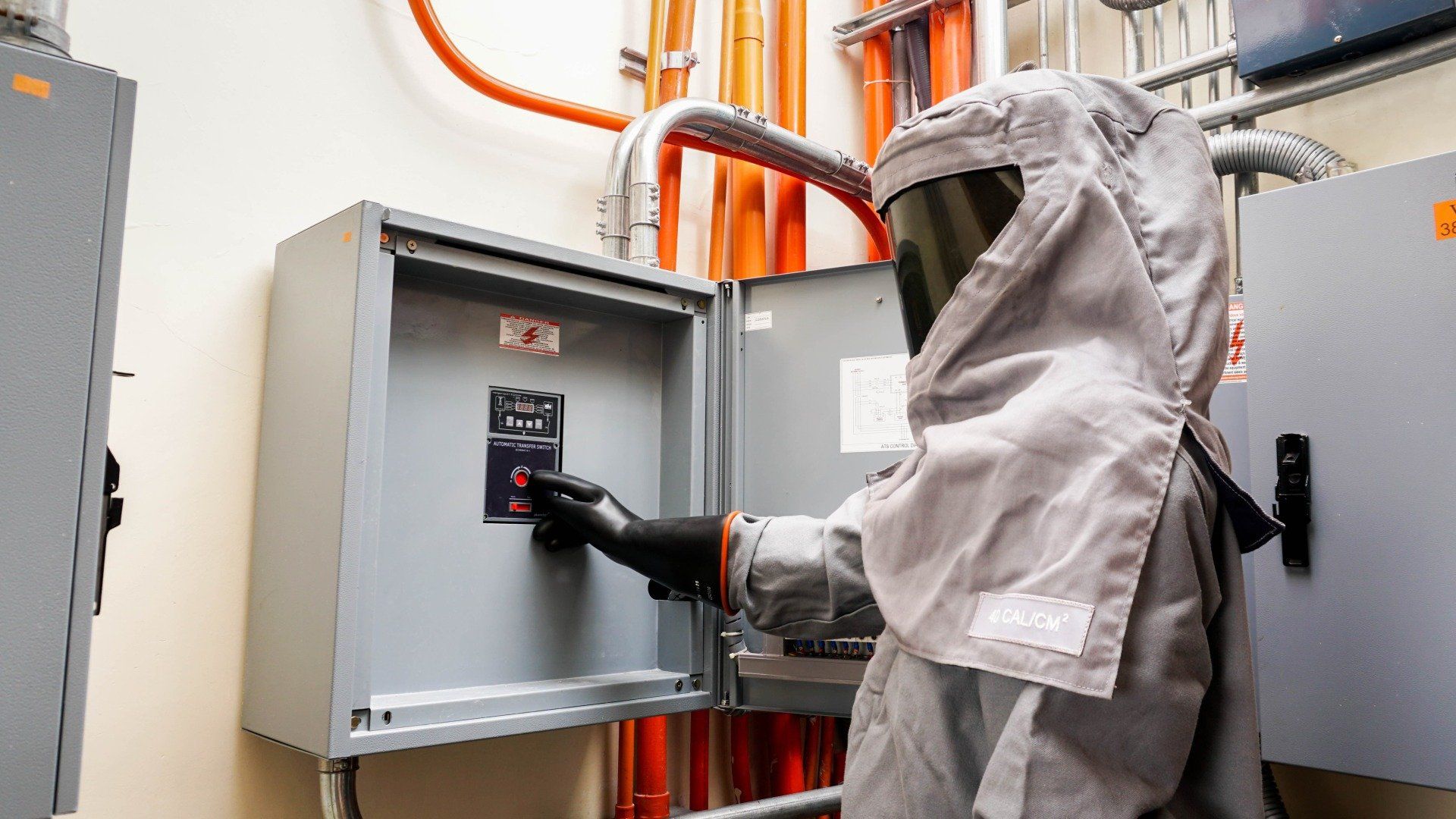
Arc Flash Risk Assessment
Proper implementation of Arc Flash Risk Assessment can significantly reduce injuries from Arc Flash and Arc blast events.