

Technical Programs
Masterclass in High Voltage Cable Diagnostics and Fault Location

OVERVIEW
This training provides focused theoretical and hands-on instruction on high-voltage cable testing, diagnostics, and fault location, covering cable construction, failure modes, safety requirements, and international standards. Participants will perform and interpret insulation resistance, VLF withstand, Tan δ, and partial discharge (PD) tests in accordance with IEEE and IEC guidelines and apply PD analysis for condition assessment of HV cables and other power assets. The course also develops practical competency in cable fault pre-location and pinpointing using TDR, bridge methods, surge generators, acoustic detection, and sheath fault location, with extensive demonstrations and hands-on exercises using industry-standard diagnostic equipment.
TARGET PARTICIPANTS
- Electrical Engineers
- Testing & Commissioning Engineers
- Substation Technicians, Utility & Power Distribution Teams
- Industrial Plant Electricians
- EPC Contractors
- Asset Management & Condition Monitoring Personnel
- Technical Managers
- Graduate Engineers
- Testing Labs.
LEARNING OBJECTIVES
By the end of this 2-day program, the participants will be able to:
- Understand HV cable construction, failure mechanisms, safety requirements, and applicable IEEE/IEC standards for cable testing and diagnostics.
- Perform and evaluate insulation resistance, VLF withstand, Tan δ, and partial discharge (PD) tests for accurate cable condition assessment.
- Analyze PD data, including phase-resolved patterns and interference mitigation, to identify insulation defects and degradation.
- Apply cable fault pre-location and pinpointing techniques using TDR, bridge methods, surge generators, acoustic detection, and sheath fault location.
TOPICS TO BE DISCUSSED
Day 1
HV Cable Fundamentals and Field Diagnostic Testing
- Understand HV cable construction, failure modes, and safety practices directly applicable to field testing operations.
- Select and apply appropriate IEEE 400.2–based test standards and voltages for different cable types and site conditions.
- Perform insulation resistance, VLF withstand, and Tan δ tests with correct field set-up, clearances, and test procedures.
- Interpret test results to assess cable condition, recognizing practical limitations and risks in real-world applications.
Cable Fault Location and On-Site Diagnostics
- Classify cable fault types and understand their real-world causes and implications.
- Apply HV safety practices while conducting cable fault location in the field.
- Perform pre-location and TDR-based fault detection for efficient on-site troubleshooting.
- Pinpoint faults using acoustic, audio frequency, and sheath detection methods for practical repair planning.
Day 2
Partial Discharge Testing – Fundamentals and Field Application
- Grasp PD theory and measurement principles for HV cables and power equipment.
- Perform off-line PD tests using standard detectors and sensors in field settings.
- Analyze PD results, interpret phase-resolved patterns, and mitigate interference for accurate diagnostics.
- Conduct hands-on PD mapping to detect insulation defects and assess cable condition practically.
Advanced Partial Discharge Measurement and Field Diagnostics
- Use advanced PD techniques (RFI, UHF, TEV, acoustic) for HV asset diagnostics.
- Perform on-line and off-line PD measurements on switchgear, transformers, motors, and cables in the field.
- Analyze complex PD data for accurate insulation assessment and defect detection.
- Gain hands-on experience detecting and troubleshooting PD defects using multiple detector types.
RESOURCE PERSON
Engr. Karl Haubner
Engr. Karl Haubner has approximately 39 years of experience in electrical engineering, including power cable testing, rotating machines, partial discharge and its interpretation, AC and DC medium to high voltage measurements, and consulting in power systems, among other areas.
His company, High Voltage Solutions Pty. Ltd., is an Energy Services company that conducts consultancy, specialized testing, condition monitoring, and training. He has represented Doble Engineering Company/Altanova (a multi-product manufacturer) from 2004 to 2014, SebaMKT, a condition monitoring company based in Europe, Western Power Integrated Network Services from 1987 to 2001 in various technical positions, and SECWA Construction, Maintenance, and Workshop Branch from 1983 to 1986. RWEL AG Trier in West Germany.
Currently, he conducts specialized training on partial discharge for power cables, terminations, and other applications required by the utility.
REQUIREMENTS
- No strict requirements required.
- Open to Electrical Engineers, Registered Master Electricians, Electrical Technicians, Testing and Commissioning Engineers, Maintenance Personnel, Substation Personnel, Utility Personnel, Engineering Students, and individuals involved in high voltage systems, cable testing, and fault diagnostics.
- Basic knowledge of electrical systems, high voltage equipment, and cable operation is an advantage but not mandatory.
TRAINING INCLUSIONS
- Certificate of Attendance
- E-Handouts
- Earn SELF-DIRECTED CPD Points
This program is accredited by:

Top Courses

Electrical System Protection Coordination
Power System Analysis are an essential part of electrical power system design. Load flow analysis, short circuit analysis, and protection coordination are necessary to verify that the electrical system including the system components, are correctly specified to perform as intended, withstand expected stress, and be protected against failures.
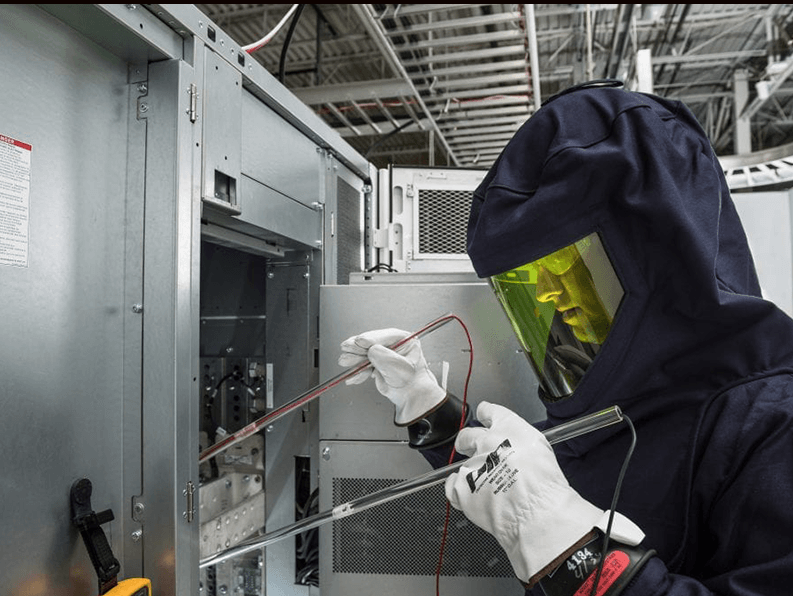
Electrical Safety in the Workplace for Mission Critical Facilities
This program will discuss the Electrical Safety-related work practices necessary to prevent workplace accidents. The program involves topics on preservation and protection of both the workers and the physical assets in the workplace hence, promoting a safe and healthy environment.
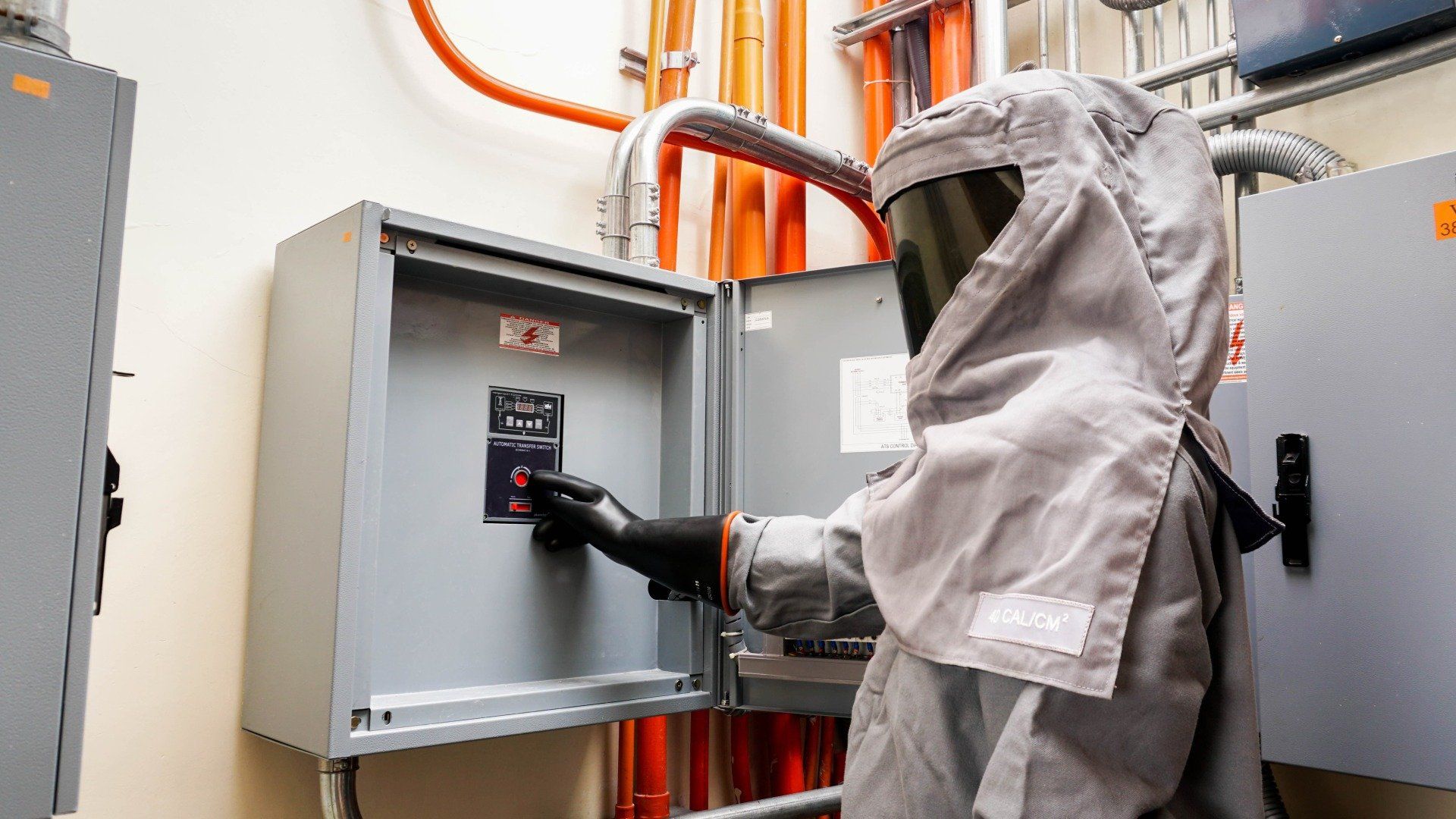
Arc Flash Risk Assessment
Proper implementation of Arc Flash Risk Assessment can significantly reduce injuries from Arc Flash and Arc blast events.