

Other Programs
Programmable Logic Control Training
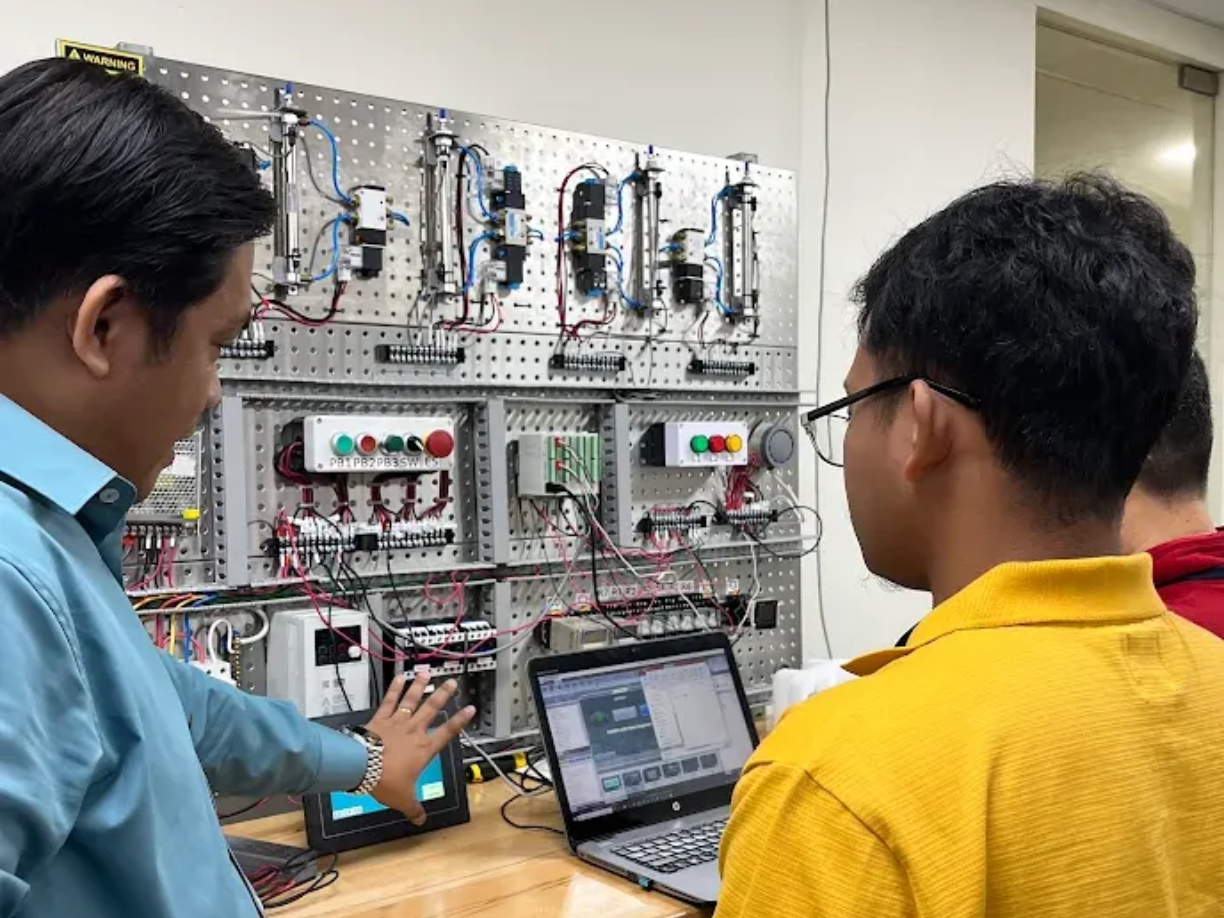
Click image for more photos
OVERVIEW
This 3-day intensive hands-on workshop is designed to equip participants with the foundational and practical skills needed to design, program, maintain, and troubleshoot automation systems using DELTA Programmable Logic Controllers (PLCs). The course focuses on integrating PLCs with real-world industrial components such as electro-pneumatic cylinders, relays, sensors, and motors. Participants will engage in structured laboratory exercises covering basic logic operations, timer applications, and motor/pneumatic control, culminating in a capstone project. This training is ideal for engineering students, technicians, and professionals in the fields of mechatronics, automation, and industrial control.
LEARNING OBJECTIVES
By the end of this 3-days PLC Programming workshop, the participants will be able to:
- Understand the fundamentals of PLC architecture and programming using Delta PLCs.
- Interpret and design ladder diagrams for various logic operations (AND, OR, NOT, etc.)
- Develop PLC programs for motor control and electro-pneumatic applications including Electropneumatic sequencing applications.
- Integrate timers, counters, relays, and actuators with different sensor feedback in a control circuit.
- Learn some advanced PLC programming instructions such as data registers, comparator and arithmetic instructions.
- Learn how to program Human Machine Interface (HMI).
- Understand the importance of data types when programming
- Know how to move data for use throughout the program.
TOPICS TO BE DISCUSSED
Day 1: Introduction to the Course Contents and Fundamentals of PLC Programming
Course Introduction
Module 1: Mechatronics and Automation Devices
- Identify mechatronics and automation system to be installed/configured and tested from the Job/ Service Order or instructions;
- Check against specifications and requirements the mechatronics and automation devices for installation, configuration & testing;
- Identify and check against job requirements the necessary materials to complete the work in accordance with established procedures;
- Select, obtain, and check for correct operation and safety the tools and testing devices needed to carry out the installation/ configuration/ testing work.
Module 2: Pneumatic System and Symbology
- Identify mechatronics and automation system to be installed/ configured and tested from the Job/ Service Order or instructions;
- Check against specifications and requirements the mechatronics and automation devices for installation, configuration & testing;
- Explain importance of Pneumatics Technology in context to Mechatronics and Automation.
Module 3: Motor Control Application
- Identify and describe types of motors commonly used in industry.
- Interpret and construct motor control circuits (manual and automatic).
- Explain motor protection methods including overload and short-circuit protection.
- Implement motor start-stop, interlocking, sequencing, and emergency stop functions.
- Troubleshoot and maintain motor control systems in an industrial setting.
Module 4: PLC Troubleshooting and Maintenance
- Understand the basic components and working principles of Programmable Logic Controllers (PLC).
- Identify and classify PLC input/output modules, wiring types, and safety considerations.
- Analyze PLC system components and recognize common fault conditions.
- Apply standard troubleshooting methods to diagnose and resolve PLC system issues.
- Execute preventive maintenance procedures to prolong PLC operational lifespan.
- Interpret PLC error codes and indicator signals to guide system repairs.
- Ensure system safety and noise regulation through proper enclosure, grounding, and separation of signals.
- Sub-Topics of Module 4 about PLC Programming and Maintenance
- Introduction to Automation and PLC
- Understanding PLC Systems
- PLC Installation and Wiring
- Preventive Maintenance of PLC:
- Cleaning and Dust Control
- Temperature and Humidity Considerations
- Avoiding Electrical Noise and Grounding Issues
- Regular Inspection of I/O Modules and Connections
- PLC Troubleshooting Procedures
- Power and RUN LED Diagnostic Flowcharts
- Troubleshooting ERR/ALM Indicators
- Checking Input/Output Signals
- Common Issues: Faulty Power Supply, Loose Connections, Overload
- Environmental Condition Checks (Temperature, Humidity, Noise)
- Practical Scenarios and Case Discussion
Day 2: Hands on Exercises of PLC Programming with Electro-Pneumatic
- Exercise 1: Logic Circuit Training- AND Circuit
- Exercise 2: Logic Circuit Training- OR Circuit
- Exercise 3: Logic Circuit Training- NOT Circuit
- Exercise 4: Self Sustaining Circuit
- Exercise 5: Interlocking Circuit
- Exercise 6: Time delay- ON Delay
- Exercise 7: Time delay- OFF delay
- Exercise 8: Time Delay – One shot circuit
- Exercise 9: Double acting cylinder using single solenoid control valve
- Exercise 10: Double acting cylinder using double solenoid control valve
- Exercise 11: Double acting cylinder Auto-return circuit using reed switch
- Exercise 12: Double acting cylinder Auto-return circuit using timer
- Exercise 13: Double Acting cylinder continuous reciprocating (single solenoid)
- Exercise 14: Double Acting cylinder continuous reciprocating (double solenoid)
- Exercise 15: Single / Continuous cycle selection circuit (1) (Remaining Switch)
- Exercise 16: Single / Continuous Cycle Selection Circuit (2) (Push button Switch)
- Exercise 17: Counter Circuits
- Exercise 18: Sequencing Operations (A+B+B-A-) with main circuit shut-off
- Exercise 19: Sequencing Operations (A+A-B+B-) Intuitive Design
- Exercise 21: Sequencing Operations (A+A-B+B-) with minimum signal blocking
- Exercise 21: Sequencing Operations (A+B+C+C-B-A-) repeat 3x
- 2 Practice Problem per group to be given on the training after all the exercises.
Day 3: Hands on Exercises of PLC Programming with Motor Control Applications
- Exercise 1: Jog Control
- Exercise 2: Forward-Reverse Starter
- Exercise 3: Immediate Reversal
- Exercise 4: Wye-Delta Starter (Open Transition)
- Exercise 5: Wye-Delta Starter (Open Transition with Fail-safe)
- Exercise 6: Motor control operation using PLC and VFD
- Exercise 7: Data Register and Comparator
- Exercise 8: HMI Programming
- Exercise 9: Arithmetic Instructions
- Practice Problem per group
Troubleshooting Exercises
- PLC Power Indicator Not Lit
- Output Device Not Activating
- ERR/ALM LED Blinking
- Digital Input Not Responding
- Program Cannot Be Written to PLC
RESOURCE PERSON

Engr. Rafael A. Dimaculangan, ECE
Training Manager and Program Development Head
PAMAV Training Institute and Technology Center, Inc.
He is currently the Training Manager and Head of Program Development at PAMAV Training Institute and Technology Center Inc. He previously worked as a University Researcher at Jose Rizal University and as an Energy Research and Program Development Engineer and Program Manager at Meralco Power Academy.
He is an Electronics Engineer specializing in Mechatronics Systems and Instrumentation & Process Control, with professional experience as a Senior Automation Engineer (PLC Programmer), Technical Manager, and Project Manager in various technology and engineering firms.
He earned his Master of Engineering in Electrical Engineering from the Technological University of the Philippines and is currently pursuing a Doctor of Engineering Management at Pamantasan ng Lungsod ng Maynila. He has also served as a Professor at National University–Manila and Far Eastern University College of Engineering.
He is a Certified Energy Manager and Certified Energy Auditor, with experience in energy systems, automation, research, project management, and technical training.
REQUIREMENTS
- Open to students, technicians, electricians, engineers, maintenance personnel, and beginners interested in industrial automation.
- No prior PLC experience is required for basic training programs.
- Participants with background knowledge in electricity or controls will have an advantage.
- Please bring personal laptop if required during the training.
TRAINING INCLUSIONS
- Certificate of Attendance
- E-Handouts
- Earn CPD Points for ELECTRONICS
This program is accredited by:
Top Courses
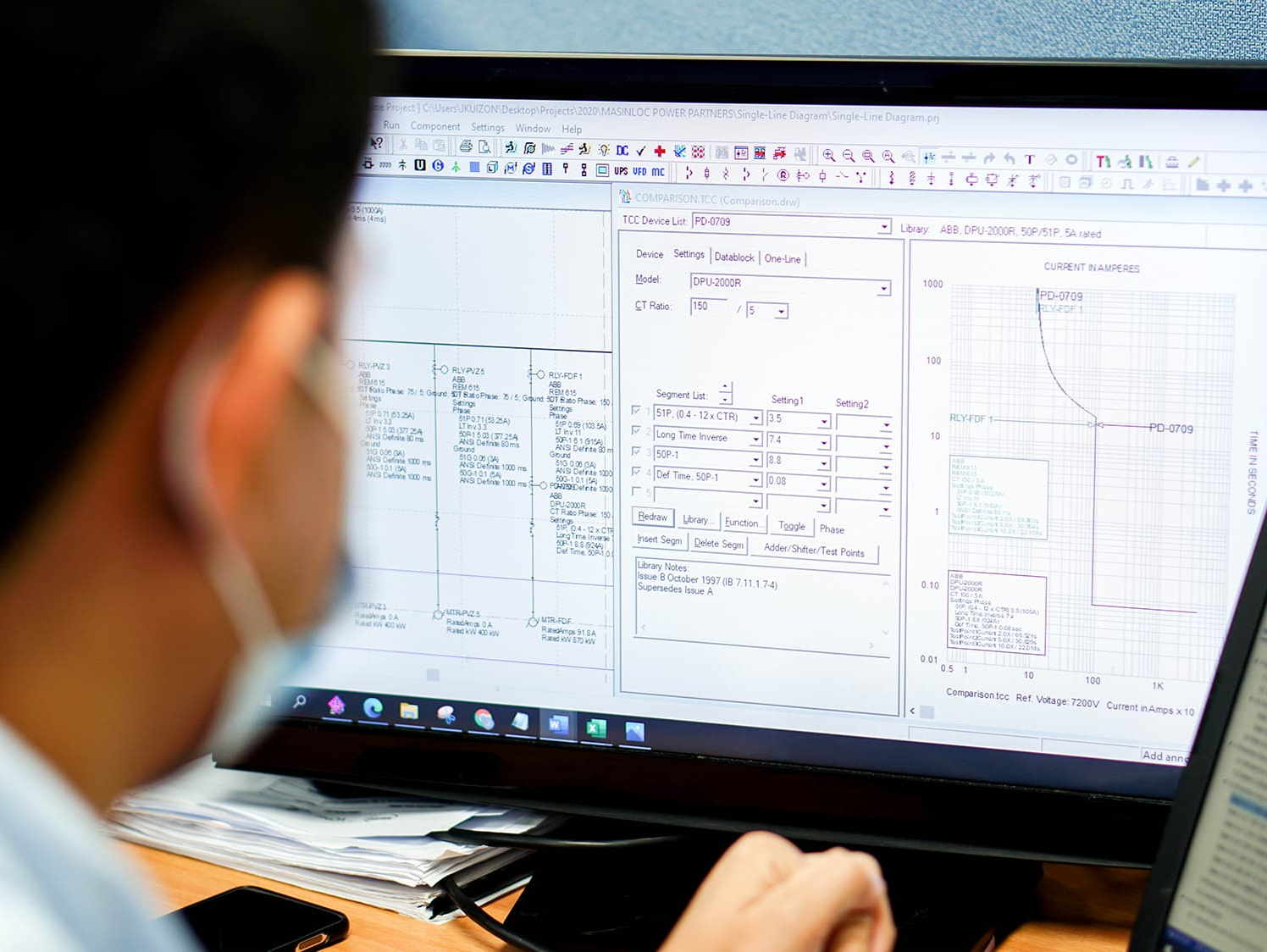
Electrical System Protection Coordination
Power System Analysis are an essential part of electrical power system design. Load flow analysis, short circuit analysis, and protection coordination are necessary to verify that the electrical system including the system components, are correctly specified to perform as intended, withstand expected stress, and be protected against failures.
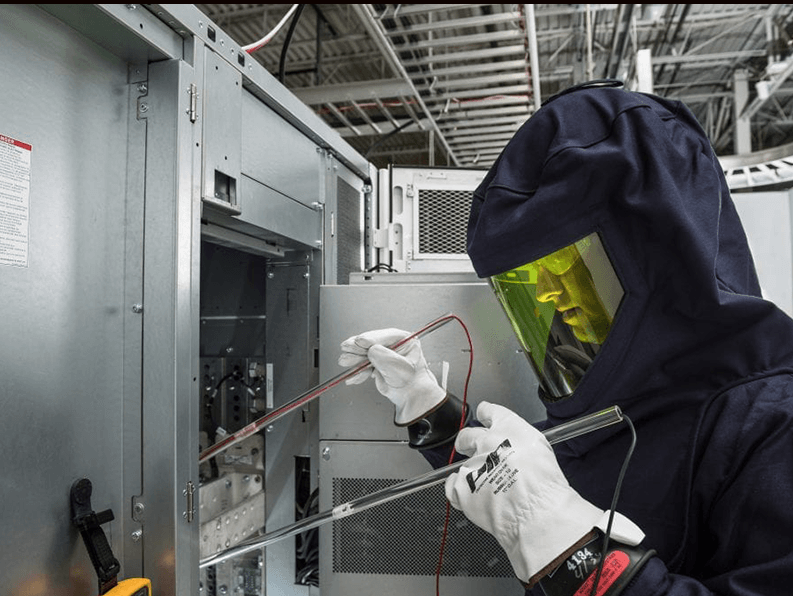
Electrical Safety in the Workplace for Mission Critical Facilities
This program will discuss the Electrical Safety-related work practices necessary to prevent workplace accidents. The program involves topics on preservation and protection of both the workers and the physical assets in the workplace hence, promoting a safe and healthy environment.
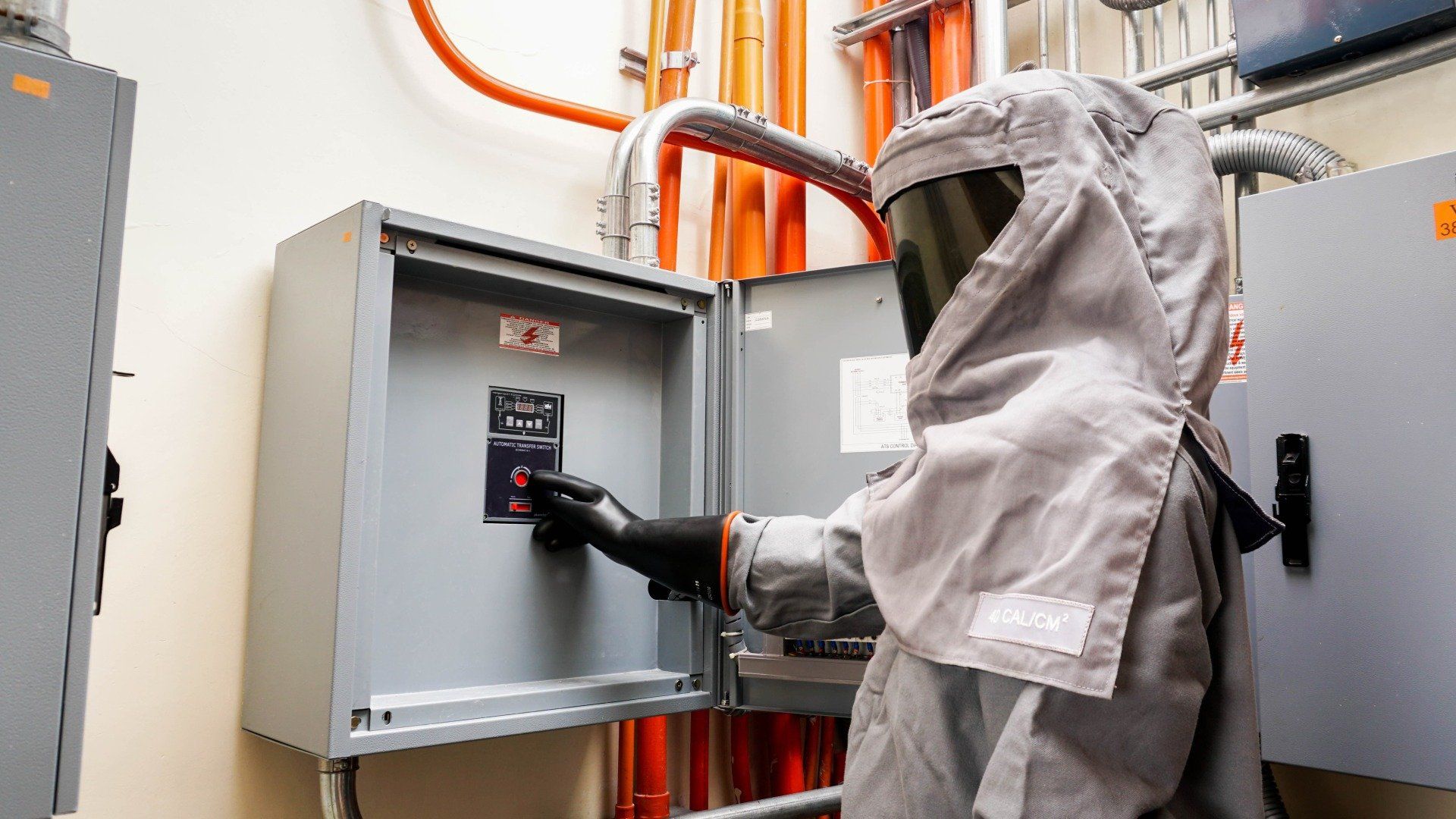
Arc Flash Risk Assessment
Proper implementation of Arc Flash Risk Assessment can significantly reduce injuries from Arc Flash and Arc blast events.